
Where the wild unicorns graze
This series explores the major upheavals that India is currently experiencing. And it follows people, who are navigating this change. The second part takes us to Bangalore, the country's start-up metropolis.

Supplying the whole country with dough: iD employees in the office with a view of Bangalore
• There’s a saying in Bangalore: throw at stone at a crowd, chances are you’ll hit a start-up founder.
India, with more than 100,000 startups, has the third largest ecosystem after the United States and China. You’ll find them all over metros like Mumbai, New Delhi and Hyderabad but Bangalore has emerged as its de-facto capital.
There is a good reason for it too.
„Companies like Wipro and Infosys had turned Bangalore into India’s IT hub by 2000s,“ says Bahadur Kumar, who runs the Draper Start-up House, a residential and networking hub for aspiring entrepreneurs, in the city.
„It has a combo of cool weather, relatively affordable real estate and a buzzing music and pub scene. As youth from across the country started migrating here, there came a point where there was more talent and ambition than there were jobs.“ In 2010, India's gross domestic product grew by more than ten per cent, attracting foreign investors. That same year, Tiger Global of the US invested $10 million in Indian online retailer Flipkart. Soon, other venture capital firms such as Softbank and Accel were backing Indian founders. By 2015, there were 10,000 start-ups in India, including eight unicorns (companies valued at at least $1 billion). Today, there are ten times as many.
The centre of the scene is Unicorn Street in the south of Bangalore. No other place has seen so many unicorns created. Buildings soar into the sky on both sides of the 500-metre-long street, full of offices, restaurants, cafes and co-working spaces. The past two years have been difficult for the young companies, which had previously been spoiled by success. Of the 80 unicorns at the time, only 17 made a profit. Most had to lay off staff and restructure their operations, and eight lost their unicorn status. Looking back, market experts blame inflated valuations. Investors became cautious, they say, and their reluctance persists to this day.
Three entrepreneurs explain what characterises the Indian start-up scene and how it is affecting the economy and society. There is the fintech founder who prefers to invest his profits in charitable projects and the development of the Indian economy rather than in private jets. The food manufacturer who has fought his way to the top despite cultural resistance. And the platform operator who returned from the US to take off in India - and is now questioning his decision.

The social entrepreneur
Zerodha is a prime example of the rise of Indian start-ups and remained unaffected by the crisis year 2023. The fintech firm has only been founded in 2010, but was profitable right from the beginning – in 2011, the profit was 16 million Euros, in 2023 it was 318 million euros. And its founder-brothers Nithin Kamath and Nikhil Kamath emerged as the posterchild of the Indian startup success story.
There’s an easy explanation to why Zerodha was an outlier. Because what it offered was irresistible.
Zerodha is an online stock-broking platform. It has a straightforward premise: each transaction you make costs 20 Cents. Before it launched in 2010, stock-brokers charged their clients fees based on the size of trade. Higher the transaction, higher the fees. Zerodha’s flat-fee model was rolled into a smooth, intuitive software. Both traders and long-term investors loved it. And it revolutionised how Indians invested in stock-markets.
Zerodha’s head-office is at some distance from the Unicorn Street, and strives to break the tedium of the glass-panelled building it is ensconced in. Its stairs have a calorie-count, its walls are lined with irreverent portraits. A large chunk of the workforce is people in their 20s and 30s. The employee-of-the-month is always the office dog: Zero.
The relaxed energy seems to compliment the founder’s own. The 43-year-old is a soft-spoken man with a kind of candour and self-deprecation unexpected for someone who’s net worth runs in 10 digits. He’s created one of India’s most profitable unicorns but says he can barely believe it. „We were just enjoying the ride,“ he chuckles.
Nithin is an unlikely hero. In a startup ecosystem dominated by engineering and management graduates, Nithin sticks out as a college dropout. He has a degree in telecommunications engineering at the renowned Indian Institute of Technology in Bangalore, but then gambled away his money on the stock market. He ended up in debt, and worked at a call centre to make up for it. „Once I set a very low benchmark in my life, it was easy to make it after,“ he says.
The call centre he worked at between 2000 to 2005 catered to the American markets. For his clients, Nithin Kamath became „Nathan Hawk“ who sold everything from DVD players to toothpaste plans. Those years taught him everything he knows about sales, says Nithin. That „the best way to sell is to actually sell.“
After his time in the call centre, he worked independently as a financial consultant and developed the company idea with his brother. They didn’t have much luck with venture capitalists, so the Kamath brothers borrowed from family and friends and pooled in their savings to launch operations. Instead of spending over advertisements, they relied on word-of-mouth and hoped their flat-fee offering would help them coast ahead. Nikhil looked over the operations and Nithin took care of the sales, becoming the face of the brand.
„I’ve been blogging since day 1 of Zerodha,“ says Nithin. On Yahoo! Messenger and Orkut, his short, crisp posts on finance, business and life gleaned a large following. „People saw me taking so much effort, answering questions. It’s a harder way of getting business but it’s more organic. It helped build credibility and get customers.“ Today, he has 2 million followers on LinkedIn and X.
The Kamaths worked hard but they were also at the right place at the right time. The Indian fintech sector has seen a revolution of sorts over the past decade. The rise of UPI, the boom of smartphones, ready availability of low-cost internet, and some timely reforms by India’s stock market regulator SEBI paved the way for a rapid growth in stock markets. When India went under a Covid-19-lockdown in 2020, Zerodha’s user-base skyrocketed. By the end of the financial year 2022/23, Zerodha’s revenue was around 754 Million Euros.
These figures are mind boggling. It was the same to Kamath too. He had started Zerodha to make money. „As we did well in business, we started questioning what is the point of all this money.“ He was sure he didn’t want to be a „lifestyle creep“. „I could go and buy a Boeing tomorrow but then there’s no end to it.“
It’s what seeded the idea of Rainmatter.
Launched in 2016, it has two arms: Firstly, Rainmatter Fintech backs startups working in fintech and health. The Kamaths already invested 44 Million Euros in over 80 startups. Another 110 million euros are available for 2024. Secondly, the charitable Rainmatter Foundation that invests in education, agriculture, journalism and ecological sustainability, among other things. One of the companies supported, for example, addresses the chronic water shortage in Bangalore. Another helps conserve the endangered snow leopard in Himalayas.
While organizations working in the development space get a relatively free pass, the fintech investments by Zerodha are for-profit. This is directly linked with Kamath’s other goal: to help generate wealth in India using Indian money.
Rainmatter, however, has some no-go areas. He won’t take a political stand. Rainmatter, too, doesn’t invest in organizations that directly engage with the political establishment. Indian businesspersons have hardly ever made their political leanings known. But for someone who’s made a virtue of promoting inclusive growth, Kamath’s decision to do the same sticks out. The country has seen an erosion of democratic rights under Modi’s rule. Free speech is under threat, minority communities are under attack. The institutions of the state have been weaponised against dissenters. And it seems set to get worse.
Kamath doesn’t deny the deterioration of India’s democracy. „But you have to be in the [political] centre as a businessman. You can’t be on either side. At least publicly. Or the other side will jump on you.“
Is he afraid of the blowback? „I will be discontinuing from Zerodha at some point in the future and I’ll probably be more open about all kinds of views.“
Kamath’s politics is constructive, not confrontational. In many ways, it suits the Modi dispensation. Kamath also shares the PM’s views about investing in India. Only, while the government might present a rosy picture of the India opportunity, his own views are far more tempered. „I don’t think India is there yet,“ he says. „The $70bn that’s come to India [from venture capital], is there a market to justify it? Maybe not. That’ll be in the future.“
With Zerodha, he wants to build a market that’d attract domestic investors too. With Rainmatter, he wants to facilitate the start-up ecosystem that will help entrepreneurs as well as help out the underprivileged. „Doing this adds a lot of meaning to life,“ says Kamath. „It helps get up and justify what I’m doing.“

He could buy a Boeing tomorrow, but he won't: Zerodha founder Nithin Kamath in the garden of his house in Bangalore
The Muslim founder
If you ever want to sample the startup scene of Bengaluru, come to the city and google ‘startup networking events’. There’s one every other day, and they’re often free to attend. Here, you’ll find men in their 20s, most often engineers and brimming with ideas, eager to pitch, preach and exchange LinkedIn ids who swore they could „disrupt“ farming, global-warming and child-rearing as we know it. All they said is needed was a venture capitalist to take a bet on them.
Things were very different in 2006 when PC Musthafa launched his company „iD“ in the city. But its startup ecosystem, now booming, was still at its infancy.
iD’s big idea was selling packaged batter for idlis and dosa. Both the steamed, fluffy idli rice cakes and the crêpe-like dosas are as much a part of a South Indian breakfast as muesli and bread rolls are in Germany. A gigantic market. But it was a time the Indian consumer was experimenting with cuisines beyond their own, as evident by the success and expansion of McDonalds, Subway and Starbucks. The investors, thus, didn’t think much of iD. „If I’d started a pizza business, they would’ve thought of that as an opportunity,“ says Musthafa. „Idli business was difficult.“
Today, the company manufacturers 100,000kg of batter a day and in 2022 netted a revenue of 53 Millionen Euros. It sells across India, middle-east and is planning to enter the US soon. And the most remarkable bit: it came from a founder whose childhood dream was only to earn enough to afford a breakfast.
Musthafa comes from a small village in Kerala, a state in southern India. His father worked on a ginger farm and struggled to earn enough to feed his four kids. To help out, Musthafa launched his first business at age 10: buying toffees from a neighbour town and selling them at twice the cost in his village. The town was 14 km away. Musthafa would walk both ways. „My first investor was my uncle,“ he says. „I built my first shop with my dad’s bench and mom’s saree.“ From the profits he earned, he bought and reared goats, and then used those profits to buy a cow and sell its milk. He also studied hard and graduated as an engineer, thanks to a few people who noticed his sincerity and sponsored his education. Despite his education in Malayalam, he learnt English with the help of his friends in college. It helped him land cushy jobs in Ireland and the Middle East.
Life had changed. Musthafa was earning enough to build a new house for his family and help fund his sisters‘ weddings. But the memories of his rough childhood were fresh. He itched to help underprivileged kids like him, starting from his village.
In 2006, when he was in his late 30s, Musthafa returned to India and moved to Bangalore. It allowed him to work, make regular trips to his village. It also helped reconnect with his cousins who were running a grocery store in the city. Over the next 15 years, they would build iD Fresh Food. PC Musthafa is the CEO and his four cousins are at various senior positions.
In Bangalore, a city with a population of over 10 million, the average consumption is around 3-4 times a week. „You’re talking of a million-dollar business opportunity only in one city,“ says Musthafa. The only trouble was, most Indians prefer their meals fresh, hot off the stove. They’re also tentative about packaged products. Most batter sold in market was likely to have preservatives and adulterants. It’s why idli-dosa batter has traditionally been homemade.
iD’s solution: stick to grandma’s recipe of batter-making. A mix of parboiled rice, dal from urad lentils and a pinch of fenugreek, no chemicals or soda. It increased costs and decreased shelf-life. But it had a crucial use-case.
At around one euro per kilo, this made the product more expensive and less durable, but it could keep up with homemade products in terms of flavour. This was well received by customers and investors alike. In its fourth round of financing, iD 2022 raised around 56 million euros. The company also expanded its product range to include Indian cream cheese (paneer), Parotta flatbreads, instant coffee and other ready-made doughs.
iD is among the few successful startups in India owned by Muslim entrepreneurs. This is significant at a time the country has seen a growing talk of 'business jihad', a conspiracy theory that suggests that Muslims are using profits from their businesses to fund anti-Hindu activities. In some towns of north India, locals have boycotted small Muslim-owned businesses. Even companies that have long enjoyed consumer goodwill, like the 90-year-old Himalaya Wellness Company, haven’t been spared by Islamophobic rumours.
In 2021, a WhatsApp message went viral claiming that iD mixed „cow bones and calf rennet“ in the batter. Cows are sacred to many Hindus, so the allegation had the potential of riling up the conservatives. The message falsely added that the company „only hired Muslims“, that its first fundraising in 2014 „adhered to strict Shariah law“.
iD was rattled enough to put out a press release denying any adulteration. It even put out a live-feed of the factory premises to reassure its consumers. It, however, stopped short of linking it to Hindutva propaganda. In our chat, Musthafa hinted it was an attack from industry peers.
„I don’t know if that’s about religion,“ he says. „If anything is successful, people take a soft aspect that’s easier to target… When we’re fighting a war against chemicals and preservatives, it isn’t easy. You get attacks on different sectors.“
His hesitation is understandable, given the political climate. In his own home state of Karnataka, the BJP government banned Muslim vendors from fairs in one temple town. Vigilantes also targeted Himalaya, the FMCG company we mentioned earlier, for its ‘halal’ policy, alleging that the company uses beef extracts in its products. But wasn’t the accusation of using cow bones a clear attempt to rile up conservative Hindus?
„Someone might want to use that as sensational news but I don’t think it's got to do with religion,“ Musthafa insists. „India is a great country to do business. I stand by it. If I follow my value system, if I follow rules of the country, I’m safe.“

Does not want to see religious reasons in the attacks on his company: iD founder PC Musthafa in his office in Bangalore
The re-returnee
If you want an interview with Rahil Shah, you need patience. And perseverance. Not because he is playing hard-to-get. Unlike most of his rank, he responds personally and does not hide behind a wall of PR people. There is simply too much going on, explains the man with the unruly hair and week-old stubble, a deadline with a large client.
In October 2023, the billionaire founder of IT company Infosys, Narayana Murthy, called on the youth to put themselves at the service of the nation to make India competitive. Murthy asked the next generation to work a 70-hour week. Working conditions in India are often abysmal, workers have little protection and burn-out rates are among the highest in the world, according to the McKinsey Health Institute. Shah is also not in favour of the 70-hour week. „We should be working smarter, not longer,“ he says. Yet sometimes he does both, especially when there is a big client and a deadline to meet.
It's unlikely you’ve heard of his company - Zomentum. It is a sales revenue platform. Think of it as an e-accountant: a software that helps businesses build proposals, send contracts, collect payment and manage revenue cycle. It’s only six years old but last year, its revenue in 2023 was around 5 million Euros a year.
It’s a classic story of Indian enterprise. Until 2017, Shah used to work as a software engineer for Twitter in San Francisco. He earned big, travelled wide, dined fine, and experienced the many luxuries money can buy. But there was always an itch to start off on his own venture. He quit his cushy life and moved to Bangalore to launch his own startup with a simple idea: „Build in a low-cost economy, sell it to a high-income one.“ He worked 14-hour days, built a team of 70, raised 16 million Euros over three funding rounds. Today, Zomentum has over 5,000 clients – small and medium-sized IT businesses – worldwide.
Shah, like many, is a beneficiary of India’s demographic dividend (over 50% of its population is below age 25), knowledge economy and venture capitalists willing to bet on them. India’s youth has the highest literacy rates than ever, translating to tens of millions of workers willing to put in long hours of relatively lesser pay. The Indian annual income for software developers is roughly 15,000 euros, in the USA it is around 100,000. Things wouldn’t have been the same in the US, where the startup scene is far older and crowded. He is aware of that; grateful too. But Sha says , „I don’t think I can do India anymore.“
Growing up, little Rahil always wanted to live outside India. Many of his relatives lived in the US and the UK. He’d see photos and hear stories of its opulence and decadence: wide roads, big houses, untamed nature and vibrant night-life. Among young professionals in India, having made a mark in the West was also a mark of success.
When he was in high school, Shah decided he wanted to study engineering at the Indian Institute of Technology. The IITs are among India’s oldest and best engineering colleges. They invite such fierce competition, the odds of getting in are 1/100. Shah was good at studies; he knew he had a chance to get in. But when the results of the IIT entrance exam came out, Shah ranked among India’s top 100. That’s the odds of 1/10,000.
If he set his mind to something, he realized, he could pull it off.
Twitter was Shah’s first job, straight off the university. Microsoft and LinkedIn had offered to hire him too but Twitter had offered to help him realize his childhood dream: of going abroad.
Starting 2014, Shah spent three months in Dublin, then three years in the US.
Even as he was living it up, there was an itch he couldn’t shake off. „I always wanted to start a business,“ he says. Shah is a Gujarati – a community known for its self-starters and entrepreneurs. India’s richest men – Mukesh Ambani and Gautam Adani – are Gujaratis, as is its prime minister and home minister. Shah’s dad is a doctor but their circles had a lot of businesspersons. „When you see so many people doing well, it’s very encouraging.“ By now, he’d also started hearing stories of the startup boom happening in India. „People were like, ‘Have you seen China grow? This is the next China.’“
In 2017, he moved to Bangalore. Shah’s co-founder worked at a venture capital firm at the time. It was not least her network of contacts that enabled the first round of financing with almost four million euros, less than a year after the company was founded.. Thus, Zomentum was born.
In his new job, Shah was everything from a CTO to a peon. One day he was coding, another day he was stocking up the pantry with crisps. He was also getting back into the „Indian way“ of work. „In the US, they work fewer hours but work efficiently. Indians get the work done too but after spending the entire day in the office.“
There was also some difference in the VCs’ approach. „In the US, [if things aren’t working] they’d write you off quicker. Here, they want a return on their investment, so they’ll keep following up. But that’s also helpful because they help you build.“
Zomentum had its share of scares but eventually, the startup steadied and grew. In mid-2023, the company now had a valuation of 90 million dollars, Shah raised another 12 Million Euros in another funding round. Things looked better than ever. So when did he start feeling like India wasn’t working anymore?
„It’s a very recent feeling,“ says Shah. „One of the biggest is, it makes business-sense to be in the US if that’s where the clients are.“ But just as importantly, his years back home after a stint abroad helped him realise his priorities: clean air, low pollution, no traffic, better infrastructure.
Major Indian cities like Mumbai, Delhi and Bangalore suffer from chronic problems of traffic congestion, water crisis and air pollution so bad, the only medical advice is „Leave town“. A construction boom has come at cost of green spaces, turning Indian cities into a tinderbox. Among the 173 cities surveyed for liveability by The Economist Intelligence Unit last year, none of these three metros was India’s best. That was Chennai – at rank 144.
India has long suffered from brain drain. But when the brains stayed back or chose to return, they share the same frustration as Shah. A record 225,000 people gave up Indian citizenship last year. A chunk of them were high-net worth individuals who moved to the West. Their reasons: search for better opportunities, healthcare, quality of life, education, and a more powerful passport.
A lot of people Shah knows have moved abroad for such reasons. And while they irk him too, Shah’s main reason to want an out is mobility. He likes to dine out, play sports, watch live performances. „Bangalore has lots of interesting things happening. But everytime I think of going out, I think of the traffic.“ In peak traffic, a couple of miles in the city centre can take up to an hour. „I’m not a stay-at-home person but in India I stay at home a lot more than I want to.“
He knows that many people in the country have other priorities than clean air and good transport. They want work and enough to eat first. But his needs are different. „People keep saying India will grow,“ he says. „I have no doubt. By the time I’m 55-60, India will be much better, traffic will be a lot lesser. But that’s all my youth. So then you start thinking, when you have a choice, do I need to go through it? Maybe not.“ --

Fed up with traffic jams and bad air: Zomentum founder Rahil Shah
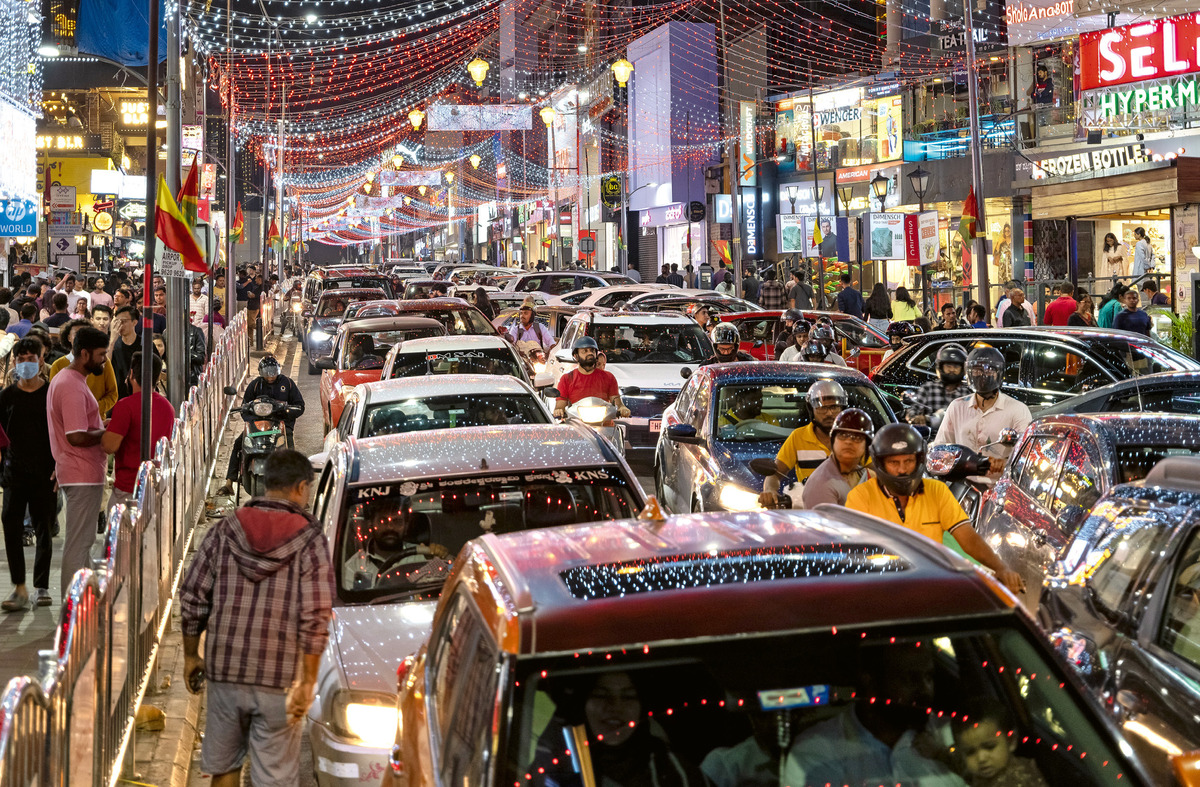
At rush hour, the average speed on the streets of Bangalore is 18 kilometers per hour - only London is slower in the world
Interview with economist Ashish Kulkarni
brand eins: Mr Kulkarni, what is the state of the Indian labour market?
Ashish Kulkarni: Depending on how you look at it, the unemployment rate is around eight per cent. But if you look at the numbers more closely, there are problems. For example, the low participation of women in the labour market: Two-thirds do not have a job and are not looking for one - and therefore do not appear in the unemployment statistics. In this country, women who work and vote are still not welcome everywhere.
What about the demographic dividend - millions of young people who want to get on and work hard?
There is a surprising problem here: the unemployment rate for graduates is 15 per cent, and as high as 42 per cent for those under 25. The higher the level of education, the higher the unemployment rate. We need more jobs for highly educated people.
How can we solve this problem?
Perhaps I'm old-fashioned and too attached to empiricism. For me, the key is production. We need to strengthen manufacturing. Historically, it has always been the source of growth. Our economy is growing without creating new jobs. This also has to do with hidden unemployment. If you go to one of the fancy hotels here, there are employees whose only job is to hand out towels at the sink in the toilets. This is a classic example of underemployment. Is this a good use of our resources as a country? No. India needs to make the transition from an agrarian, predominantly rural society to an urbanised, manufacturing society.
What is the government doing?
I don't think their measures are sufficient. But to be fair, the other governments of the last 30 years were no better. But the current government is very good at suppressing discussion of the problem.
What about the huge infrastructure projects that have been launched recently?
Spending on physical and digital infrastructure and the start-up economy has almost doubled. I think the infrastructure development makes sense, but I'm not so sure about the rest in terms of solving the unemployment problem. Nowhere in the world have start-ups been able to create the number of jobs we need. No economy in the world has ever grown significantly by encouraging start-ups. I have nothing against start-ups, but I don't see any empirical basis for them to solve India's unemployment problem.
Ashish Kulkarni is a lecturer in economics and statistics at Indian institutions such as the prestigious Gokhale Institute and Symbiosis University in Pune.
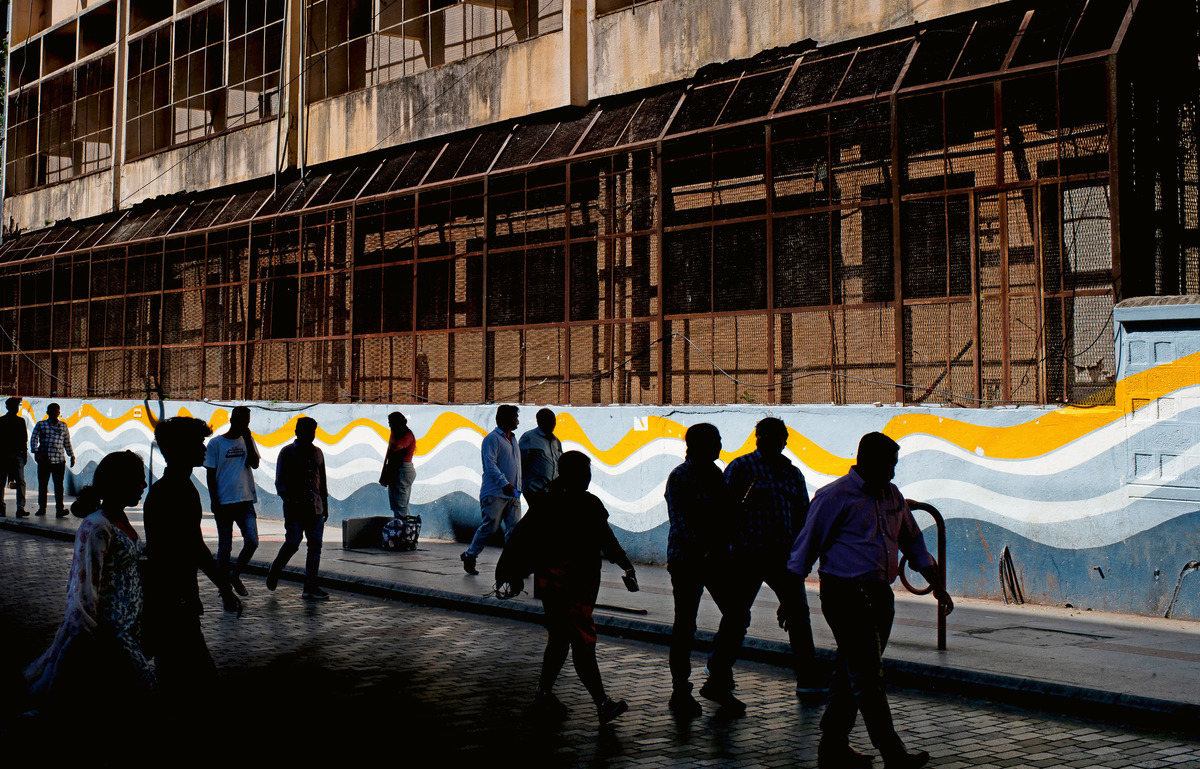
India has no shortage of young workers
India in figures
Unemployment rate
The number of 15-year-olds in India who have been looking for work for at least a year without success is currently just over five per cent. Between 2017 and 2020, this figure was almost nine per cent. At the same time, however, the number of people in regular employment has fallen since 2017. How is this possible? Unemployment figures are falsified by the fact that there are more and more self-employed people. These are mostly low-paid domestic workers or taxi drivers. Or as Indian economics professor Amit Basole puts it: „These are the kind of jobs you create for yourself when no one hires you.“ When large numbers of people switch from permanent employment to freelancing, it's usually not a good sign for the economy.
Share of permanent employees in the labour force, in percent,
… in 2017/2018: 23
… in 2022/2023: 21
Share of temporary employees in the labour force, in per cent,
… in 2017/2018: 25
… in 2022/2023: 22
Proportion of self-employed people in the labour force, in per cent,
… in 2017/2018: 52
… in 2022/2023: 58
Gross Domestic Product (GDP)
When Indian Prime Minister Narendra Modi visited the US in 2014, his country was the tenth largest economy in the world. Eight years later, it was fifth - and there is a good chance that in a few years it will be third, ahead of Japan and Germany. While there is some debate about how India's economic indicators are calculated, there is no doubt that the economy is growing. The Reserve Bank of India's forecast for the current fiscal year was recently revised upwards to 7.6 per cent. These are rates that Germany has been dreaming of since the resignation of Adenauer. But that only tells part of the story. Germany's GDP per capita is more than twenty times higher than India's. Put more simply, India still has a lot of growing to do before it can stagnate at German levels. Even if Germany were to stop growing immediately and India were to grow by an impressive 15 per cent a year, it would take until around 2045 for the two countries to reach parity.
Forecast GDP growth in 2024, in per cent,
… in India: 6,3
… in Germany: 0,9
GDP per capita in 2023, in euros,
… in Germany: 48.540
… in India: 2.400
Sources: The Indian Express; IWF
––––––––

This series is funded by the European Journalism Center, as part of the Solutions Journalism Accelerator. This fund is supported by the Bill & Melinda Gates Foundation.
None of these organizations have any influence on the content.