
Prescribing Change: How Tamil Nadu is Healing India's Pharma Woes
This series explores the major upheavals that India is currently undergoing. And it accompanies people who are navigating this change. In the seventh and final part, we explore the pharmacy of the world - and the dark side of the pharmaceutical boom in India. Our reporter in Tamil Nadu investigated how a supply of cheap and safe medicines can work.
• In November 2021, Indian Prime Minister Narendra Modi stands in front of a row of Indian flags and folds his hands in a "namaste," with a look of confidence on his face. He looks firmly into the cameras broadcasting his speech on the role of the Indian pharmaceutical industry in the Covid-19 pandemic live on television and social media and states: “In the wake of the pandemic, India has exported lifesaving medicines and medical equipment to over 150 countries” and had supplied “more than 65 million doses of Covid vaccines to nearly 100 countries”. Every line resonates with the pride of Hindu nationalists. "The global trust earned by the Indian healthcare sector has led to India being called the 'pharmacy of the world' in recent times," he said, emphasizing the word "trust" with a higher decibel.
India’s pharmaceutical sector may have garnered global attention at the peak of the pandemic, but the country’s ‘pharmacy of the world’ branding, a position Germany held for decades, had been in the making in recent years.
Consider this: India is the world’s largest supplier of generic medicines, exporting affordable drugs worldwide and used to treat ailments ranging from coughs, colds and even cancer; drugs made in India are used globally to treat malaria, tuberculosis and to lower cholesterol. The country accounts for 60 per cent of the world’s vaccine production. So the measles shot being administered in any part of the world is most likely ‘made in India’, with the country accounting for 90 per cent of the world’s measles vaccine production.
The largest importers include the USA, the UK, Brazil, the Netherlands and Russia. Germany is in sixth place, having purchased medicines worth 523 million US dollars from India in 2022/2023.
It is no surprise that the Indian prime minister praised the domestic pharmaceutical industry as an "important driver of the country's economic growth" in his 2021 address. The combination of “high quality and quantity at an affordable price” had generated immense interest in the Indian pharma sector around the world and attracted foreign investments.
There was great euphoria in the industry when the Indian Covid-19 vaccines were sold to Morocco, Brazil, Myanmar, Sri Lanka, among others. There was talk of “vaccine diplomacy” amidst a debilitating second wave of the pandemic that was creating havoc across the world.
It was a major milestone. Until the 1970s, India imported most drugs but was now producing enough to meet both domestic as well as international demand. The country’s 50 billion dollar pharma sector comprising nearly 3000 pharmaceutical companies that collectively run about 10500 manufacturing facilities, employing about 3 million people, almost the population of Puerto Rico, was on a high.
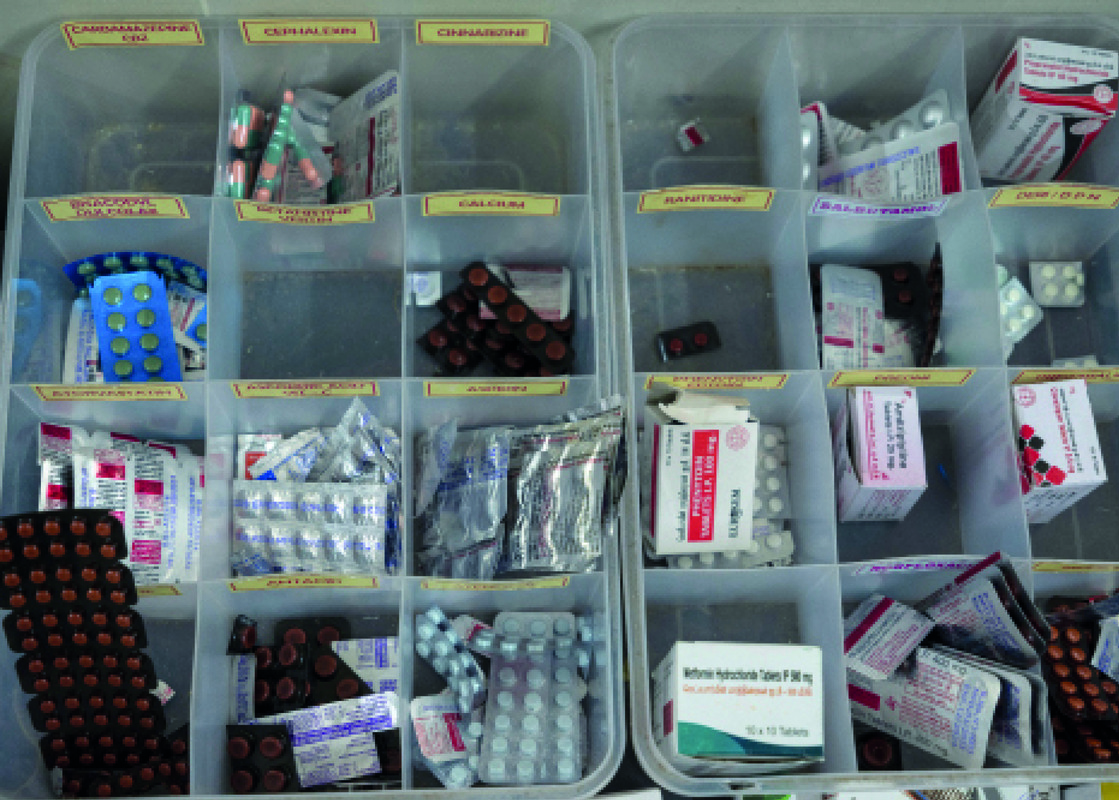
Deadly Sirup
But barely a year after Modi’s hymn of praise at the international conclave, doctors in the east African country of Gambia discovered a mysterious ailment in young children. Hospitals were flooded with parents whose children were suddenly unable to urinate, vomiting, and experiencing swelling in their arms and legs. The diagnosis was acute kidney damage. In The Gambia alone, 70 children died from this within two months. The World Health Organization (WHO) has confirmed that the cause of death in all cases was a cough syrup produced in India. This product was contaminated with the industrial solvents diethylene glycol and ethylene glycol, which are found in lubricants, paints, and oils. In Uzbekistan and Cameroon, a further 70 children died from Indian cough syrups, and in the USA, at least four people died from contaminated eye drops.
These deaths exposed a massive quality problem in the world's third-largest pharmaceutical nation: the inadequate monitoring of drug manufacturers. Since then, Indian pharmaceutical inspectors have repeatedly reported horror stories of unhygienic conditions, life-threatening working conditions, inferior raw materials, inadequate equipment, and faulty documentation in a sector dominated by small and medium-sized companies.
Soon after the deaths in The Gambia, the Indian health authorities recalled batches of medicines and temporarily withdrew the manufacturing licences of some companies. The federal health ministry set a deadline for pharmaceutical companies to fulfil their WHO good manufacturing practices certification.
Not enough, say critics.
“I would like to see what products they found problems with. I would like to see the actual licences that they have suspended? In the absence of this data, I don’t know if what is being represented is true,” says public health activist Dinesh Thakur, who has been demanding better regulation of the country's pharma companies for nearly two decades.
“Unfortunately, this industry has grown to such proportions that benign solutions will not
work. There has to be a radical solution to this, there has to be a fundamental reform to the way we think about medicine. If you only tinker around the edges, I am sorry, nothing is going to change,” Thakur says.
Dinesh Thakur’s frustration is rooted in years of campaigning for change in the way India regulates its pharma companies, despite him showing evidence for the “rot that has set in the system”. He is rarely placed in his activism, having worked with both an American multinational pharmaceutical company and an Indian pharma giant, that made him familiar with drug regulation laws both in the United States and in India, and offered him an insight into the many quality gaps even at a major company. He is respected – and feared – as an expert.
From 2003 to 2005, he worked for Ranbaxy Laboratories, an Indian company. The company was once the largest generic drugs manufacturer in the country, until Thakur blew the whistle on it for falsifying data and making false statements to the Food and Drug Administration. U.S. regulators fined the company 500 million dollars in 2013, in what was the largest drug safety settlement ever. But although Thakur had already drawn the world's attention to the problems of Indian pharmaceutical production more than 20 years ago, he believes that not much has changed. At the end of 2023, the Indian Medicines Regulatory Authority once again seized counterfeit medicines in pharmacies in New Delhi and the eastern Indian state of Jharkhand. And people are still dying from contaminated medicines, even in the country itself. For example, 14 small children in the north Indian state of Jammu and Kashmir died after taking a cough syrup. For Dinesh Thakur, the biggest shortcoming is that the medicines are not comprehensively tested during production, but only when they are already on the market.

Photo: © Dinesh Thakur
Visiting the importers
In theory, this should no longer be a problem. Indian law requires companies to have a hygenic environment, use sterilised equipment, maintain a controlled temperature for storage and testing facilities, and use only tested water in drug manufacturing. Manufacturers are also required to conduct laboratory tests on raw materials before using them to make drugs, and to test each batch of drugs in licenced laboratories before releasing stocks to the market.
But the implementation of these rules has been poor, with laxity in checks.
In most cases, drugs are sold in pharmacies before inspectors take the first samples for testing in government laboratories.
"Unlike other countries that insist on quality standards built into manufacturing, our law looks at quality in the market" Thakur says. This has prompted the U.S. and the European Union to increase scrutiny of drug imports from India. Indian drugmakers that want to export to the US or EU must submit an application, provide information about their company and products, and invite the importing countries to conduct on-site inspections. Only after receiving certification can they ship their goods.
The regulatory authorities of the importing countries therefore have the right to inspect Indian companies at any time. Inspection teams of two to five people usually arrive at the factories within a few days of being notified. If there are quality concerns, imports can be stopped immediately. In addition, the larger countries maintain their own information networks, where they exchange information about current inspection results and problems at manufacturers.
Quality problems in the ‘world’s pharmacy’, has led the U.S. and the European Union to step up their auditing of manufacturing facilities in India, certifying those they find to be fit to export to them. The U.S. FDA stepped up inspections over the past year following the many violations recorded by the regulator including falsifying of data, carcinogens in medicines and non-sterile manufacturing processes among others. Other drug importers from India such as Nigeria carry out pre-shipment tests.
But a single Indian state has been quietly showing the way to fix the quality problem of India’s pharma sector.

The Solution made in India
The southern Indian state of Tamil Nadu is a quiet example of how things can be done better. The local government has implemented a system to procure, test and monitor medicines before they are distributed to some four million patients in government hospitals and local pharmacies. With resounding success.
While this solution has not been widely replicated in India (more on that later), it has attracted the interest of many foreign authorities, including those in Bangladesh, the Maldives, Thailand, Sri Lanka, and Indonesia, who want to know how Tamil Nadu succeeds where the rest of the country fails.
It’s a busy afternoon in Chennai, the capital of Tamil Nadu. The retreating monsoon has led to traffic snarls all around, more so on this road flanked by the sprawling Madras Medical College on one side and the central train station on the other. The hospital’s location has ensured it draws people from across the state for treatment.
Here Jaya Malini stands at the pharmacy counter, pores over prescriptions and hands out medicines packed in glistening aluminium foil or blister packs, the shelves around her stacked with paper boxes containing similar strips and syrups in bottles. Nothing unusual in the process or arrangement except for the words emblazoned on each medicine: ‘For sale in Tamil Nadu only’.
It’s a hard won tag for manufacturers as they must jump through multiple hoops of inspections and tests before they can qualify as suppliers to Tamil Nadu, bigger in geographical size than Greece, and known as much for its shore temples as its robust healthcare system.
The hospital pharmacy where Jaya Malini works sources its medicines from state-run warehouses. But it’s not a simple procurement like in other parts of the country.
Like all pharmacies and hospitals in Tamil Nadu, the hospital pharmacy where 43-year-old pharmacist Jaya Malini has been working for ten years obtains its medicines from government warehouses, which are subject to particularly close scrutiny. The district's pharmaceutical warehouse, one of more than 30 depots, is about ten kilometres from the hospital.
In the two-storey structure spread over 40,000 square feet - a tad less than a football stadium - drugs are stacked on shelves or walk-in coolers based on their storage requirement. At the far end of the warehouse is a paper label that says "frozen" for stock of drugs that have been rejected for poor quality.
An operator enters data on new drug arrivals on his computer into an online inventory, which randomly selects a set of drugs to be sent to a lab via a central office for testing. The identity of the drug manufacturer is not revealed to the lab, and the manufacturer has no way of knowing which labs its drugs have been sent to in what state officials describe as a "double-blind method" - a rare but critical step to prevent the use of money or influence to tamper with test results.
Over the past 15 years, the Tamil Nadu Medical Services Corporation (TNMSC) has blacklisted 188 products, sanctioned 32 companies across the country, and banned 19. The strictness seems to be working: of the 25,605 samples tested by the TNMSC in fiscal year 2022 / 2023, only 0.66 percent failed. The agency tests drug manufacturers from all over India, but only for supplies to government hospitals in Tamil Nadu. There, it has become a bulwark against counterfeit and contaminated drugs.
The TNMSC owes its inception to a drug procurement scandal in the 1990s. At the time, hospitals in Tamil Nadu were buying drugs directly from distributors and manufacturers, often for kickbacks, with no guidelines in place for quality testing or vetting of manufacturers.
“Pharmacies were selling loose drugs, not in strips. Just about anybody was supplying drugs. There were medicine shops in house garages,” said R Poornalingam, 78, a former bureaucrat, known as an upright officer who was brought in to set up the TNMSC with a triple mandate to reform the procurement process, eliminate corruption and improve quality of drugs.
He installed layers and layers of tests and inspections to fortify the state against India’s weak drug regulation. It’s a model that countries sourcing from India need to adopt, Poornalingam said. “Buyers have to protect themselves. Buyers should be beware, rigorous. My suspicious attitude towards suppliers helped me improve quality,” he said, sipping coffee on an overcast morning in Chennai.

Saving the country’s image
Following the cough syrup deaths, India intensified inspections, mandated testing of all drugs meant for export in a larger effort to salvage the country’s image hit by global scandals. The country's drug export promotion agency has also held conferences in eight states to sensitise manufacturers to maintain quality, said its top official, Lakshmi Prasanna.
“We cannot attribute the entire responsibility (of the deaths and injuries) on the regulator. There is a lack of quality culture and compliance level (to norms) in the industry,” said Lakshmi Prasanna, director of regulatory affairs at the Pharmaceuticals Export Promotion Council of India, set up by India’s commerce ministry to improve drug imports from the country.
Prasanna said India had strengthened checks following the cough syrup deaths and there was more attention being paid to quality now.
But is that enough to ensure patient safety?
“It’s a responsibility of the agency sourcing medicines to protect the safety of their own population, whether they are sourcing from their own country or outside,” she said.
Over the years, the TNMSC model has received many accolades. Delegations from many countries have visited the southern Indian state. The WHO has sent delegations from Indonesia, Thailand, and Malaysia, among others, and the World Bank commissioned officials from Mauritius to study Tamil Nadu's approach in 2023. Most recently, in August 2023, officials from the Maldives were on site to see if the Tamil Nadu authority could take over procurement and control for their country.
In federally organised India, at least 21 states have also looked at the model - but with the exception of Kerala and Rajasthan, none have implemented a similar system. Officials from other states that have tried to adopt the successful model report political and administrative hurdles. They point to the unique "political backing" that the TNMSC enjoys in Tamil Nadu, which enables it to break through the resistance of the deep-pocketed pharmaceutical sector
“There is a cost associated with these activities. TNMSC employs people to vet companies,” says activist Thakur, explaining that the cost of running a corporation like TNMSC is also a limitation of this solution. And even if the number of medical emergencies due to adulterated drugs is reduced, it has not yet been determined whether Tamil Nadu will gain a financial advantage from its elaborate audits, or whether this advantage will be eaten up by the costs. Nor does the system offer any locational advantage, since the TNMSC procures and tests drugs from all over the country. Those who have received Tamil Nadu's rigorous seal can use it as a badge of honour and a selling point in the rest of the country, where controls are less stringent.
For those involved in Tamil Nadu's healthcare system, it doesn't matter. Back at the Madras Medical College, the buzz of footsteps and families giving health updates to anxious relatives on the phone envelops the lobby where Jaya Malini dispenses medicines.
“I have not seen one case of a patient returning to report an adverse reaction.” says Malini, 43 as she dispenses medicine. “We have never had a drug shortage either.”
Malini read newspaper reports on the deaths caused by made-in-India cough syrups, but considered it as a problem far removed from her state’s reality. “In Tamil Nadu there are a lot of checks. I am sure these drugs are safe,” she said, paused for a second, only to repeat: “They are safe”. --

––––––––

This series is funded by the European Journalism Center, as part of the Solutions Journalism Accelerator. This fund is supported by the Bill & Melinda Gates Foundation.
None of these organizations have any influence on the content.